
Debut of the ‘Me’ Model — a Private, Locally-Run Augmented Human AI — Marks the Launch of a New UK Research Lab Built to Democratise AI
Turing Elite Research Labs, a newly launched independent AI research lab, and GAEA AI, a UK-based AI company, today announced the world’s first AI Augmented Human Podcast — debuting the Turing Elite ‘Me’ model in a live episode of GAEA Talks, one of the fastest-growing AI podcasts on YouTube with over 1.2 million subscribers.
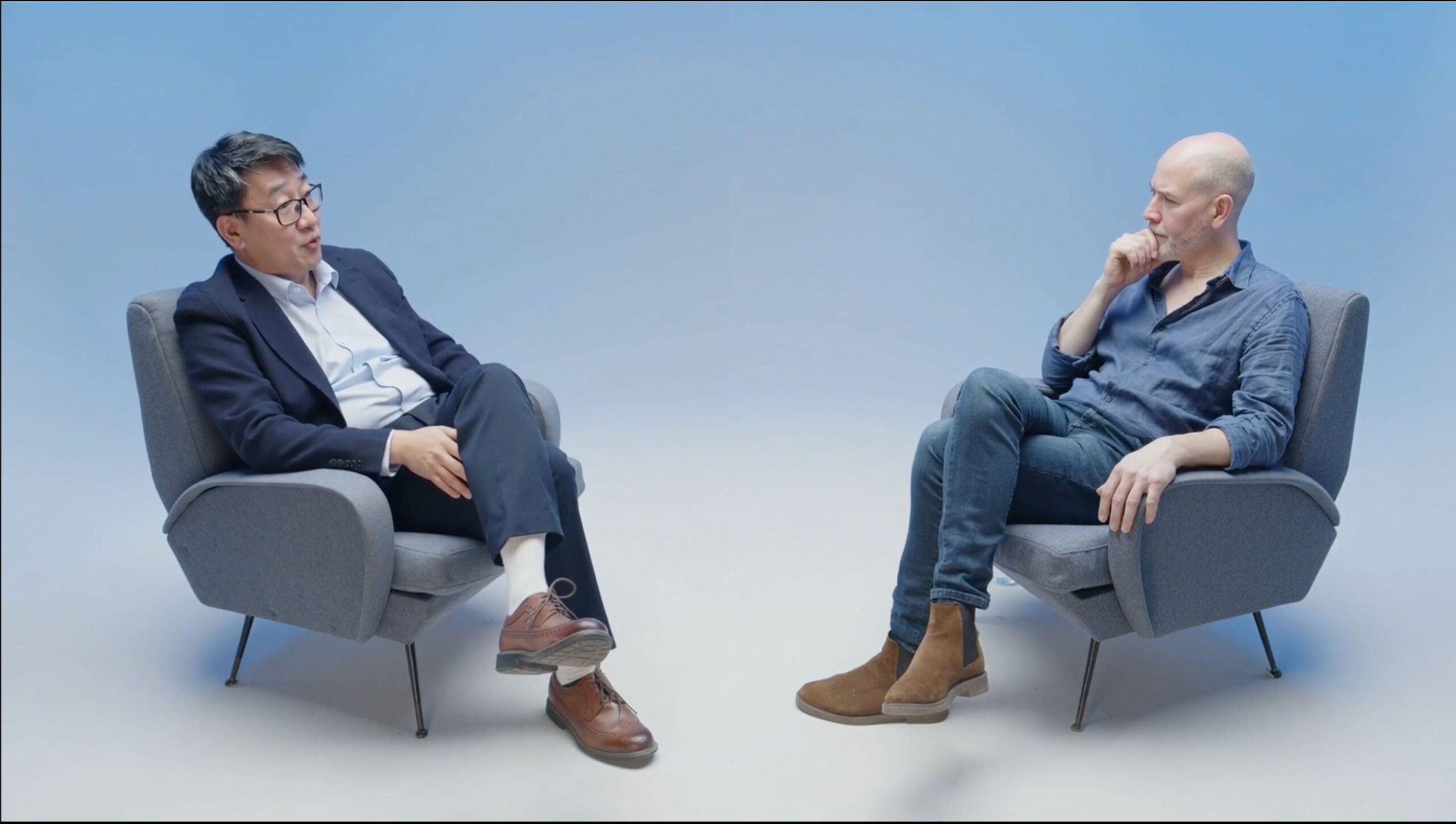
The episode, featuring GAEA Talks host Graeme Scott and Professor Yi-Zhe Song — one of the UK’s foremost AI researchers — begins as a real conversation between the two. Without warning, the episode transitions to a fully AI-generated interaction between their augmented human counterparts, powered by the ‘Me’ model. The challenge to every viewer: decide for yourself where reality ends and AI begins.
The announcement also marks the official launch of Turing Elite Research Labs, co-founded by Scott and Professor Song with a mission to build elite, expert AI models for business and enterprises that run locally, respect privacy, preserve sovereignty and empower individuals rather than replace them.
The ‘Me’ Model: A New Category of AI
The ‘Me’ model is the first professional-grade augmented human AI designed to run entirely on local compute — no cloud, no data centres, no internet connection required. Trained on a fraction of the compute used by comparable systems, it delivers two-person emotional interaction simultaneously, reproducing the known voices, expressions, characteristics and personalities of the real people it represents.
The model sets a new benchmark for what augmented human AI should achieve. As the co-founders describe it: “The benchmark for successful augmented human AI is not a Turing test against a stranger — it is whether the person themselves, their close friends and their family cannot distinguish the difference between real and AI. Our benchmark is reality and the human experience.”
This represents the first step on a path toward real-time intelligent augmented humans with private knowledge, memory, insight and personality — all running on consumer-grade hardware.
Built on World-Leading Research
The ‘Me’ model’s approach was informed by the principles of democratised AI exemplified by Professor Song’s research at the University of Surrey’s SketchX Lab — including NitroFusion, one of the world’s first single-step diffusion models for near-instant image generation on consumer hardware, and SD3.5-Flash, a highly efficient text-to-image model now deployed in Lenovo laptops worldwide. These projects demonstrated that frontier-quality generative AI can run entirely on local compute — a principle that inspired Turing Elite’s approach to dynamic audio-visual human rendering.
Why This Matters
The current generation of AI systems relies overwhelmingly on centralised cloud infrastructure, requiring users to surrender their data, creativity and intellectual property to train models controlled by others. Turing Elite Research Labs was founded to challenge that model fundamentally.
By delivering expert AI that runs on local hardware, the lab addresses three converging crises simultaneously: the escalating energy demands of AI data centres, the erosion of personal data privacy, and the concentration of AI capability in the hands of a few large technology companies.
About the Co-Founders
Professor Yi-Zhe Song is a Professor of Computer Vision and AI at the University of Surrey’s Centre for Vision, Speech and Signal Processing (CVSSP), one of the UK’s oldest and largest AI research centres. He is Director of the world-leading SketchX Lab, Co-Director of the Surrey Institute for People-Centred AI, and Academic Lead at The Alan Turing Institute, the UK’s national institute for data science and AI. Ranked consistently in Stanford University’s World Top 2% Scientists list, his research into how human drawing informs machine vision has shaped the field for over two decades. He is Co-General Chair for ACM Multimedia 2028 and holds a PhD from the University of Bath, an MSc (Best Dissertation Award) from the University of Cambridge, and a First Class Honours degree from the University of Bath.
Graeme Scott is Co-Founder and CEO of GAEA AI and host of GAEA Talks, one of the world’s fastest-growing AI-focused podcasts on YouTube with over 1.2 million subscribers. His background spans the music industry, conflict zones, and enterprise technology, bringing a unique perspective on how AI should serve humanity.
Watch the full episode on YouTube:
GAEA Talks — World’s First AI Augmented Human Podcast
About Turing Elite Research Labs
Turing Elite Research Labs is a private, independent research lab committed to delivering world-class AI focused on privacy, edge computing, control and real-time performance. Co-founded by Graeme Scott and Professor Yi-Zhe Song, and inspired by the British tradition of elite problem-solving — from Alan Turing and Paddy Mayne to Newton and Tim Berners-Lee — the lab builds expert AI models that run on local compute, preserving privacy, sovereignty and control.
About GAEA AI
GAEA AI is a UK-based artificial intelligence company enabling organisations to explore the past, understand the present, and predict the future with unmatched speed and precision. Through its GAEA Talks podcast, the company also produces one of the world’s leading AI discussion series, featuring researchers, policymakers, ethicists, and industry leaders.